

Spin casino Plinko
Introduction
When I look at Spin casino Plinko, I see a format that strips casino play down to something deceptively simple: you choose a stake, select a risk level, drop a ball, and watch it bounce through a field of pins until it lands in a payout slot. On the surface, that is all there is. In practice, Plinko creates a very specific kind of session rhythm that feels different from slots, Spin Casino roulette page with bonus terms and account details, and even most instant-win products.
That difference is exactly why Plinko keeps attracting attention. It is easy to understand within seconds, but the experience changes sharply depending on how the settings are configured. A low-risk setup can feel steady and controlled. A high-risk setup can turn the same screen into a tense, swing-heavy session where many drops return little and a rare top multiplier becomes the whole point of playing. For players in New Zealand who want to understand what Spin casino Plinko game actually offers before trying it, that distinction matters more than the visual simplicity suggests.
One detail that trips up newcomers is the payout table layout: the multipliers on the outer edges look tempting, but the odds of those lanes hitting are far slimmer than the centre column, so a session can drain quickly if you keep chasing the wings. Before you settle on a stake, check whether the game applies a house edge to every drop or only to specific multiplier tiers, because that difference changes the realistic pace of your bankroll more than the volatility label suggests.
What Plinko is and why it keeps drawing players in
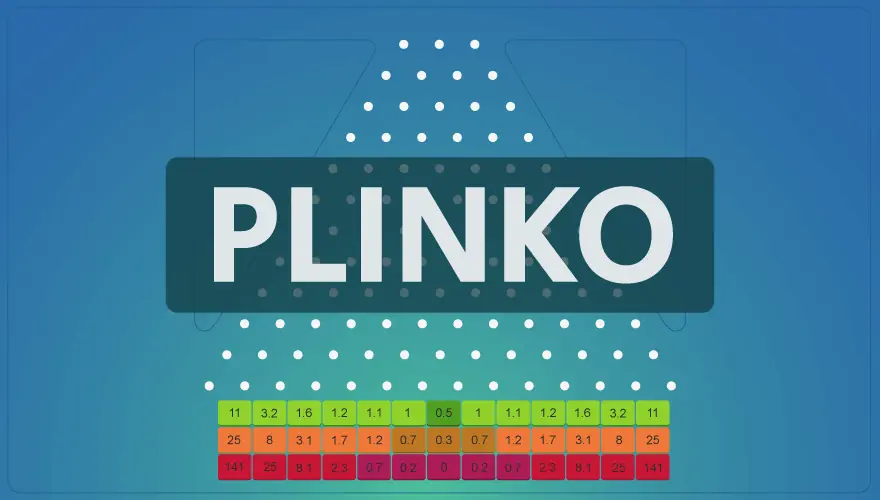
Plinko is a ball-drop gambling game built around a vertical board filled with pegs. After the ball is released from the top, it hits peg after peg and deflects left or right until it reaches one of the payout pockets at the bottom. Each pocket carries a multiplier. The final result is your stake multiplied by the value of the slot where the ball lands.
The concept is visually clean, and that is one of its biggest strengths. There are no reels, paylines, symbol maps, bonus information for Spin Casino players rounds, card decisions, or dealer procedures to learn. A new player can understand the interface almost immediately. That low barrier to entry is a major reason why Plinko at Spin casino stands out among modern casino games.
But the real pull goes beyond simplicity. Plinko creates suspense in a very visible way. In a slot, the result often feels sealed the moment the spin starts, even if the animation takes a few seconds to reveal it. In Plinko, the path itself becomes the event. Players watch every bounce. A ball can drift toward a high multiplier, veer away at the last second, then settle into a modest return. That visible journey gives the randomness a shape, and that shape is emotionally powerful.
One detail I find especially important: Plinko often feels more “interactive” than it really is. The player chooses settings, but once the ball drops, there is no skill-based correction, no timing trick, and no hidden way to influence the route. That gap between perceived involvement and actual random resolution is central to understanding the game properly.
How the Plinko mechanics work in practice
At its core, the Spin casino Plinko format is built on a few adjustable variables. These usually include stake size, number of rows, and risk level. The exact presentation can vary, but the logic remains consistent: the board layout and risk profile shape the distribution of outcomes.
When the ball starts falling, each peg collision sends it slightly left or right. Over many drops, this creates a distribution where central landing zones appear more often than extreme edge pockets. That is why the highest multipliers are usually placed near the outer edges, while the lower and more common returns sit closer to the middle. In simple terms, the most lucrative outcomes are positioned where the ball is least likely to finish.
That sounds obvious, but it has an important practical meaning. Players should not read the board as a list of equally available targets. It is a probability map. The attractive numbers on the edges exist precisely because they are harder to hit.
| Core element | What it changes | What it means for the player |
|---|---|---|
| Stake size | The value of each drop | Directly affects session cost and the impact of swings |
| Risk level | How outcomes are distributed across the board | Higher risk usually means more low returns and rarer large multipliers |
| Rows / board depth | The number of deflections before landing | Can alter pacing, variance feel, and the spread of possible outcomes |
| Multiplier layout | The reward structure at the bottom | Shows where common and rare results are concentrated |
Risk level is the setting most players need to understand before anything else. In low-risk mode, the board is usually designed to produce more frequent mid-range or smaller returns, with less aggressive separation between ordinary and rare outcomes. In high-risk mode, the spread becomes harsher. Many drops can end in low multipliers, sometimes below the stake, while a small number of positions carry very large top-end values.
This is where the game’s true personality emerges. The same Plinko board can feel almost casual in one configuration and brutally swingy in another. That is why I never treat Plinko as one fixed experience. It is closer to a framework whose mood is determined by settings.
Why the game feels exciting and how session tempo is shaped
Plinko is fast, but not in the same way as a turbo slot. The rhythm comes from short cycles of anticipation. Each drop resolves quickly, yet it still gives the eye something to follow. That creates a loop of immediate action and visible suspense. There is no long reel animation, no wait for a feature trigger, and no complicated transition between phases.
For many players, this creates a strong “one more drop” effect. The commitment per round feels small. The outcome is revealed within seconds. And because the ball’s path is visible, every result looks like it almost could have gone somewhere else. That last part is psychologically important. Plinko often produces near-miss tension without using a slot-style bonus tease.
One of the most memorable things about Plinko is that it can make tiny moments feel dramatic. A ball clipping two pegs near the edge can create more tension than a standard losing slot spin. Not because the mathematics are different, but because the randomness is staged in front of the player instead of hidden behind reels.
The pace of a session depends on three factors:
- Drop speed — how quickly each round resolves and whether autoplay or rapid repeat play is available.
- Risk setting — high-risk play tends to produce sharper emotional swings and stronger reactions to dry stretches.
- Stake discipline — larger bets can make a fast game feel much faster from a bankroll perspective.
This is where players can misread the format. Because the screen looks minimal and each drop is brief, Plinko can seem harmlessly light. In reality, a quick-fire session can consume a bankroll faster than expected, especially when the player is chasing a specific high multiplier outcome. The interface is simple; the spending rhythm may not be. When the support team feels slow, best Spin Casino legality explains the fastest ways to reach them.
Understanding probability, outcomes, and the real risk profile
If I had to highlight one thing a player should grasp before launching Spin casino Plinko game, it would be this: Plinko is not about steadily climbing toward a target. It is about accepting a probability distribution in which most results cluster away from the most attractive payouts.
The ball’s movement looks organic, but the practical result is statistical. Central slots are generally more reachable. Outer-edge slots are less common. The board is not “trying” to send the ball anywhere; it is simply structured so that some endings occur more often than others. Over a short session, anything can happen. Over a long session, the distribution matters.
That has several consequences for real play: To understand the wagering rules behind each offer, open compare bingo options at Spin Casino next.
- Rare top multipliers should be treated as exceptional events, not expected milestones in a normal session.
- High-risk mode can produce long stretches of underwhelming returns, even if the board advertises eye-catching maximum values.
- Low-risk mode is not “safe” in an absolute sense; it is simply less severe in how outcomes are spread.
I often notice that players confuse visible randomness with fair intuition. Because they can watch the ball bounce, they start feeling that the next drop might “correct” a recent pattern. That is a mistake. A sequence of central landings does not mean an edge hit is due. Plinko can encourage pattern-seeking because the motion is so easy to read, but that does not create predictive value.
Another useful observation: Plinko compresses the emotional experience of variance. In many slots, volatility is wrapped inside symbols, dead spins, and occasional features. In Plinko, the same concept is presented more nakedly. You see a chain of low results, then maybe a meaningful hit, then another run of modest returns. The structure is transparent, but the swings remain real.
How Plinko compares with slots and other common casino games
Plinko is often grouped with instant-win products, and that is a better comparison than putting it next to traditional slots. The reason is simple: the game outcome is short, direct, and not built around layered bonus architecture. There are no expanding wilds, free spins ladders, hold-and-win rounds, or narrative progression. What matters is the outcome distribution of repeated drops.
Compared with classic online slots, Plinko offers:
- faster result cycles,
- less visual clutter,
- more obvious outcome mapping,
- fewer thematic distractions,
- greater emphasis on raw session swings.
Roulette settles on a wheel spin, a number, and a payout, while Plinko turns the journey itself into the entertainment. Crash games reward timing your exit, but Plinko removes that pressure entirely and hands you a fixed probability spread instead. Blackjack and poker-style titles keep strategy alive after the bet lands, whereas Plinko locks your choices in the moment you pick a risk level and drop the ball. The result is a game that trades decision-making for pure spectacle, which suits players who want fast rounds without second-guessing their next move.
| Game type | Main attraction | What Plinko does differently |
|---|---|---|
| Classic slots | Features, themes, symbol combinations | Replaces layered design with direct, visible outcome resolution |
| Roulette | Simple bets and fast rounds | Adds a visual path that makes each result feel more animated |
| Crash games | Cash-out timing and tension | Removes timing decisions and shifts focus to distribution settings |
| Blackjack | Decision-making and house-edge management | Offers almost no in-round strategy once the drop begins |
This comparison matters because player expectations often come from the wrong category. Someone arriving from feature-heavy slots may find Plinko refreshingly clean or too bare. A player who enjoys decision-based games may see it as too passive. A player who likes short, repeatable rounds with visible suspense may find it unusually effective.
Who is likely to enjoy Plinko and who may not
In my experience, Plinko at Spin casino is best suited to players who value quick rounds, clear presentation, and a strong sense of anticipation without needing a complex ruleset. It works well for people who want to understand the structure of a session at a glance and who do not need story, symbols, or bonus stages to stay engaged.
It may suit players who:
- prefer short rounds over long feature build-ups,
- like seeing the result unfold visually,
- are comfortable with repeated small-to-medium outcomes,
- want to experiment with low, medium, or high-risk settings.
It may be a poor fit for players who:
- want meaningful strategic decisions during each round,
- expect frequent large payouts,
- get bored by minimalist presentation,
- find rapid bankroll swings stressful.
One thing I would stress for NZ players trying Plinko for the first time: this is a format where personal tolerance for repetition matters. The board is visually satisfying, but the core action never really changes. If you enjoy subtle variation inside a fixed loop, that is fine. If you need evolving features or changing objectives, Plinko can start feeling one-note surprisingly quickly.
Strengths and limitations of Spin casino Plinko in real sessions
The strongest quality of Spin casino Plinko is clarity. The player can see the board, the potential multipliers, and the broad logic of the setup before the first drop. That transparency is refreshing in a market where many casino products bury their real rhythm under bright effects and long animations.
Another major advantage is flexibility of mood. By changing the risk level, the player can shift the session from relatively measured to aggressively swing-driven without needing to learn a new game. That makes Plinko adaptable. It can be used for short, low-stakes experimentation or for more intense sessions built around chasing rare top-end outcomes.
Its limitations are just as real. The game can become repetitive because the action loop is so stripped down. There is also a tendency for players to overestimate how often the standout multipliers might appear. The board displays them prominently, which is visually honest in one sense, but that visibility can still distort expectations if probability is not being considered properly.
I would summarise the practical balance like this:
- Strong point: immediate understanding and very low learning curve.
- Strong point: visible suspense on every drop.
- Strong point: risk settings meaningfully change the feel of play.
- Weak point: limited depth once the novelty wears off.
- Weak point: high-risk sessions can drain funds quickly.
- Weak point: the simplicity of the interface can hide the intensity of variance.
A useful way to think about it is this: Plinko is simple to operate, but not automatically simple to manage. That is one of the format’s most misunderstood traits.
What to check before starting a Plinko session
Before playing Spin casino Plinko, I recommend looking at the setup as a bankroll and pacing decision rather than just a casual click-and-drop activity. A few practical checks can make a big difference to the overall experience.
- Review the risk level first. This is not a cosmetic setting. It changes how the session behaves and how often you are likely to see modest versus standout results.
- Set a drop budget, not just a money budget. Because rounds are so quick, it helps to decide both how much you are willing to spend and how many drops you want to make.
- Understand what the displayed multipliers represent. They show possible outcomes, not balanced chances.
- Use demo play if available. This is especially useful for understanding how different board settings feel over repeated rounds.
- Avoid reading patterns into recent results. The visual path can tempt players into false confidence about what comes next.
That last point deserves repetition in practical terms. Plinko can create the illusion that the board is “running cold” or “leaning toward the middle.” In reality, those are human interpretations layered on top of random outcomes. Watching the ball bounce makes the randomness feel narratively meaningful, but that does not make it predictable.
If a player approaches Plinko with that discipline, the format is much easier to judge fairly. Without it, the same simplicity that makes the game attractive can also make it deceptively easy to overplay.
Final verdict
Spin casino Plinko offers a focused, fast-moving gambling experience built around visible randomness, adjustable risk, and immediate result cycles. What it really delivers is not complexity or strategic depth, but a clean loop of tension and resolution. That is its central appeal.
The game’s strongest qualities are easy to identify: a minimal learning curve, a clear payout structure, and a style of suspense that feels unusually direct because every drop is shown in motion. It also has a practical advantage over many slots: the player can understand the broad shape of the experience before committing to a long session. For a closer look at the games library, Spin Casino VIP program details before claiming bonuses or depositing sorts the titles by theme and pace.
Where caution is needed is equally clear. Plinko can be far more swing-heavy than its simple interface suggests, especially at higher risk settings. The top multipliers are enticing, but they should be viewed as rare outcomes, not routine targets. And while the format is engaging, it does not suit everyone. Players who want strategic decisions or deep feature design may find it too narrow after the first stretch of play.
So, is Plinko worth trying? If you want a quick, transparent, visually tense casino game and you are comfortable with probability-driven swings, yes, it can be a strong fit. If you prefer slower development, richer mechanics, or more control during play, another format will probably suit you better. That, in the end, is the most honest way to describe Plinko: simple to enter, easy to misread, and much more defined by risk settings than the clean board first suggests. Anyone stuck on account verification can follow the steps laid out in Spin Casino Gates of Olympus slot page.
FAQ
How does the Plinko ball-drop work at Spin?
A ball drops from the top board and bounces across pegs until it lands in a scoring slot. Each slot is linked to a multiplier that determines the round result.
What risk level does Plinko use, and how should a player interpret multipliers?
Plinko rounds are multiplier-based, so higher multipliers are tied to specific landing zones. Risk increases when choosing strategies that increase bet size, since the multiplier applies to the stake.
Where can a returning player start a Plinko round quickly after logging in?
Open the Plinko game lobby in the online casino, then select the bet size and hit the launch/drop button. Make sure the account balance is visible and refreshed before starting a real-money play.
What not to miss before launching real-money Plinko?
Before you chase a lost spin, look at the three things the screen actually tells you: the bet you placed, the balance you had at the time, and whether the round was in normal play or a bonus feature. When a bonus is running, the wagering requirements usually apply only to those specific rounds, so a standard spin that glitches mid-way sits in a different bucket than a free-spins sequence that fails to register. Take a common scenario: you drop five dollars on a slot, the reels spin, then the game crashes before showing the result. In most cases the platform logs the bet as placed and credits the outcome once you reload, but if you were inside a bonus round with a 35x wagering condition attached, the free spins may simply vanish without a trace — that is when a screenshot of the round mode and bet amount becomes your only real evidence.
Why does the Plinko launch button seem unavailable after sign up?
Account access may be limited until registration is completed and the session is fully loaded. Check that login is successful and that the browser or mobile browser is not blocking game scripts.
In real-money play, what determines the final win amount in Plinko?
The win is calculated from the landed slot multiplier multiplied by the selected bet. Adjusting bet size changes the potential impact of the same multiplier outcome.
Does Plinko work well on a mobile casino app or is the mobile site enough?
Both mobile options can support Plinko ball-drop play, but the app usually provides the smoothest real-time controls. For the mobile browser, use a stable connection and keep screen rotation steady during launch.
What happens when a player makes repeated mistakes with bet sizes in Plinko?
The selected bet is applied immediately to the next round, so changing bet size mid-session can quickly alter round impact. Review the bet panel before each launch/drop.
What does mirror access mean if Plinko is temporarily unavailable?
A working mirror is a backup access route to reach the official casino site. Use it to continue Plinko play during disruptions, but verify the account login and game lobby are functioning normally after switching.
What account and payment step should be completed before withdrawing any winnings from Plinko?
Withdrawal requests typically require account verification, so pending documents can delay cash-outs. Check that the withdrawal method is confirmed and that any balance updates after play are reflected before submitting a withdrawal.
If login keeps failing on the Spin Plinko page, what should be done next?
First confirm the correct username and password, then try the latest login method available on the official casino site. If password recovery was used, wait for the link to expire status and request a new one if needed. Check that the device time and browser settings are not blocking secure sign-in. After successful sign-in, reopen the Plinko game lobby and start a new round in the mode shown on-screen.
